"I’m Hamlet" to play in London 2012 Festival

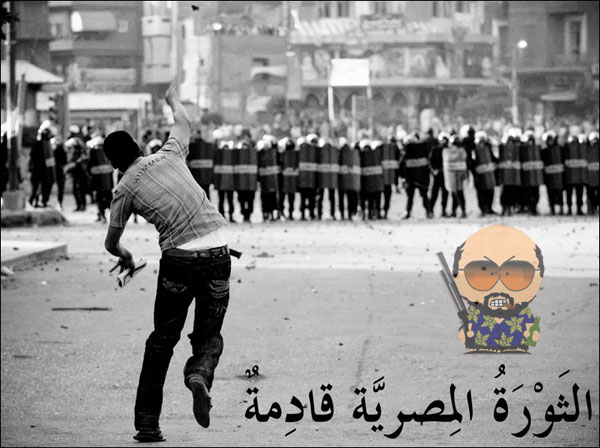
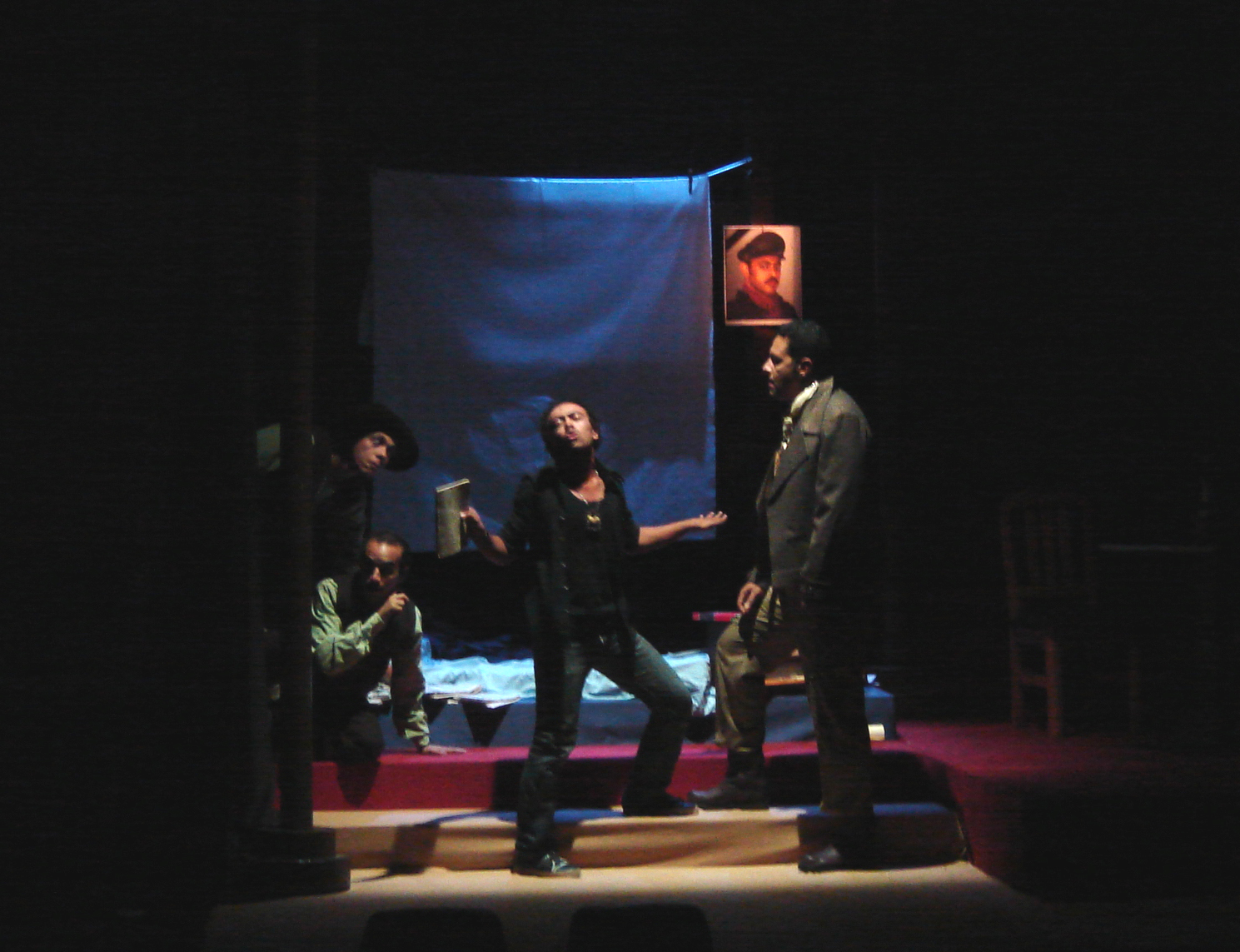
Young Egyptian director Hani Afifi will stage his Hamlet adaptation, انا هاملت or I’m Hamlet, as part of the London 2012 festival around the Olympics, reports the Seventh Day site (in Arabic).  The play premiered at Cairo’s Creativity Center in the summer of 2009 and was well received at the Cairo International Festival of Experimental Theatre that September; Muhammad Fahim, in the role of Hamlet, won the festival’s Best Actor prize.  My favorite line is where Hamlet asks Ophelia (in the equivalent of the nunnery scene, which takes place at Cairo’s upscale Cafe Cilantro: “But how can I date someone who has 500 friends on Facebook?”

Saad Hariri as Hamlet

Google just came across (on what looks to be some right-of-reasonable Jewish-themed blog) this satirical sketch comparing Saad Hariri to Hamlet (pursued by ghost of his father Rafik, even as evil stepfather Hassan Nasrallah seduces the weak mother/land, Lebanon-Gertrude).  Someone posted it back in January, when Saad’s government collapsed. 

Hamlet [to himself]: And this is why I have returned from Dubai? When I could have as well managed the business from there, enjoying myself like a pig in the mud? Or even from London… oh London, London… And here, what do I have here? Shia, Sunni, Christians, Druze all scheming and aiming to kill each other, the heat, the Syrians, the Hezbollah, the Israelis for crying out loud… who needs all this crap? Now this revenge schtick too… no, I definitely should get a ticket and scram!

The framing is better than the writing, but whatcha gonna do?  Unlike Hamlet, Saad Hariri has never been known for his eloquence.

Hamlet and Hamlet satire postponed in Egypt

A protest strike by young theatre people (in Arabic) has postponed the presentation at Cairo’s high-profile Tal`ia (Vanguard) Theatre of three plays including Hamlet and The Dance of the Scorpions, Mahmoud Aboudoma’s 1989 postmodern political Hamlet offshoot.  The three were apparently scheduled to run for a full week — which is a big deal since experimental and youth (or other amateur) plays typically only get to play for one or two nights.

Obama depicted as Hamlet on Libya

It is predictable that, even as Qadhafi is typed as Richard III or any of a number of other Shakespearean villains, Barack Obama gets described as Hamlet.

From Hip Hop Republican, 3/22/11

A few highlights:

  • Newsweek in a piece called The Big Dither:  “The president has been more Hamlet than Macbeth since the beginning of the revolutionary crisis that has swept the desert lands of North Africa and the Middle East. To act or not to act? That has been the question. The results of his indecision have been unhappy.”
  • Victor Davis Hanson generalizes the lack-of-leadership thing to Obama’s presidency as a whole: “Hamlet couldn’t quite ever act in time — given all the ambiguities that such a sensitive prince first had to sort out. In the meantime, a lot of bodies piled up through his indecision and hesitancy.”
  • This caricature from Crystal Wright’s piece at Hip Hop Republican.
  • And of course the Right Side News has to weigh in: “We have a ‘Hamlet on the Potomac’ in our Oval Office.  If you listen closely you can hear Obama twisting himself into knots asking the wrenching question:  ‘To lead… or NOT to lead?’ (Our apologies to Bill Shakespeare!)”
  • Former CFR chairman Leslie Gelb begs to differ (and engages in some Shakespeare interpretation in the process).
  • And Saul Landau in Counterpunch goes even further, denouncing the whole Hamlet role as a trap into which Obama has fallen.

It’s interesting to see the Anglo-American view of Hamlet as hesitator, quite at odds with the typical Arab view of Hamlet as revolutionary martyr/hero, getting a tiny bit of play in the Arabic press through translations of articles by American pundits.  Here’s the one by Victor Davis Hanson (in Arabic, in the Gulf-based al-Bayan) and here’s the Leslie Gelb piece on hypocrisy.

Revolutionary Egypt: a "To Be Or Not To Be" moment

A couple of samples from online articles that quote Hamlet to underscore the urgency of events in Egypt.

From an alarmist FoxNews (of course) interview with Egyptian tycoon Naguib Sawiris, who actually supported the Tahrir protesters and even bought them tents and blankets: 

When the protests began, Sawiris, a Christian billionaire who owns everything from hotels and construction companies to cell phone and investment interests, was out of the country. He chose to return, unlike other businessmen who have already fled.
“I came back because this was not a revolution of the Muslim Brotherhood.
This was the young people of Egypt doing what we failed to do … There is not a single other businessman who has supported it because it’s very dangerous for their interests; but the country is in a position to be or not to be,” he said.

Toward the end of a long, passionate article  by Mariam Saad in something called The Peninsula: 

Generations grew up within the armed forces and were trained to obey the government and surrender to its resolutions. However, if the situation deteriorates and becomes desperate, the challenge poses itself to the individual; to be or not to be? How will the situation resolve itself?

You can easily find many more of these in English and especially in Arabic.

To some ears, even the protesters’ chants had a Shakespearean ring to them! Al-Hayat column by Abdel Ghani Talis, in Arabic, here.

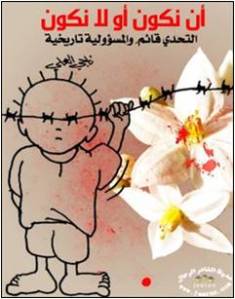
"To be or not to be" cartoon

I found this political cartoon while looking for an example of sloganized use of a Hamlet quotation for a talk I’m giving at Tufts this week.  Many of my American hearers have trouble believing that “to be or not to be” can be a passionate call to arms.


It’s by the Palestinian artist Naji Salim Hussein al-Ali (1937-1987); you can see more of his work here: http://shaeirrahhal.jeeran.com/selections/archive/2010/6/1059177.html

Nehad Selaiha rereads my dissertation…

Hamlet galore: Nehad Selaiha enjoys a Hamletian feast at the Creativity Centre
http://weekly.ahram.org.eg/2009/963/cu1.htm

Of all the foreign dramas translated into Arabic, including Shakespeare’s plays, Hamlet has been the most influential since the 1950s. Not only has its language, particularly Hamlet’s “To be or not to be” soliloquy and phrases like “The time is out of joint” or “Frailty, thy name is woman”, found its way into the rhetoric of political writers and intellectuals and even in the daily speech of the educated, it has also haunted the imagination of playwrights, directors and actors, appearing in different guises to address different needs at different historical moments. Echoes of Hamlet abound in many of the best dramas produced in the 1960s, and at least three tragedies, Alfred Farag’s Sulayman Al-Halabi and Al-Zeir Salem and Salah Abdel Sabour’s The Tragedy of Al-Hallaj, modeled their heroes on the Prince of Denmark, giving them more or less the same moral/political/ existential dilemmas. While the play itself has not received many ‘textually unadulterated’ productions — the most famous and memorable being Sayed Bedeir’s at the Opera house in 1964/65, starring the late, great Karam Metawi’, and Mohamed Subhi’s 1978 one, in which he also played the title role — it has inspired a spade of stage adaptations, original plays and what can be best described as ironic, inter-textual engagements.

In her extensively researched, well informed and deeply insightful doctoral dissertation on the appropriation of Hamlet by Arab culture between 1952 and 2002 (entitled Hamlet’s Arab Journey: Adventures in Political Culture and Drama, soon to be published in book form), American scholar Margaret Litvin demonstrates that the different Arab Hamlet-appropriations since the 1952 Egyptian revolution ‘fall into 4 main phases’ that ‘have corresponded to the prevailing political moods in the region’. The first phase (1952-64) was one of ‘euphoric pride after the 1952 revolution’, and in it ‘Arab dramatists’ preoccupations with Hamlet were focused on [achieving literary and theatrical] international standards’. The second phase (1964-67) was one of ‘soul-searching and impatience for progress’ and ‘Hamlet’s incorporation into Arab political drama’ then took the form of what Litvin calls (in the manuscript of her thesis, which she has graciously sent me, and from which all the above quotations and the ones that follow are taken): a ‘”Hamletization” of the Arab Muslim political hero’. ‘Such Hamletization,’ she goes on to say, ‘was an easy way for Arab playwrights to emulate (and borrow) Hamlet’s complexity of characterization and to obtain the moral and political standing it conferred. Thus the critical demand for deep, complex, yet politically topical characters encouraged serious dramatists to weave strands of Hamlet in their heroes — in turn linking the character of Hamlet with the theme of earthly justice in the audience’s imagination’ (Litvin, pp, 12, 13. 82).
Early Arabic Shakespeare translations

This week I figured out which French translation was used by Tanyus Abdu, author of the first published Arabic Hamlet. (Hint: pick up John Pemble’s very entertaining Shakespeare Goes to Paris (2005). Then spend three days at Widener comparing half a dozen 18th and 19th-c French translations.)

It’s amazing no one has bothered to trace this before. It’s common knowledge that the early Arabic adapters/translators of Shakespeare were mainly Syrian-Lebanese immigrants to Egypt who knew French better than English and had absorbed the neo-classical aesthetics of French theatre. It’s even known that the earliest Arabic versions of Shakespeare were translated not from English but from French. (No surprise there — same thing happened in Russian, in Spanish, probably in plenty of other languages. Paris, capital of the 19th century, etc., etc.)

But… doesn’t this matter? Every critic and scholar I’ve seen notes the French mediation, then proceeds as though it never happened. They spill ink deploring or defending the “distortions” introduced by early adapters, especially Abdu and Mutran — without considering which of these distortions (like Abdu’s much-mocked happy ending!) were already present in their French sources. What a waste. Stop seeing it as a simple two-way exchange between Shakespeare and his Arab translator, and the literary argument about textual fidelity falls apart; even the Bourdieusian sociological argument (adaptation to the needs of Cairo’s emerging middle-class commercial theatre audience, then pursuit of autonomous aesthetic standards, etc.) can be made in a considerably more complicated and fruitful way.