Unknown's avatar

About ml

A comparative literature professor interested in how Arabic literature has worked, throughout its history, as a part of world literature

Gary Wills on Shakespeare and Verdi

No Arab connection per se, and kind of unexpected to find Wills (brilliant polymath though he is) writing about this, but check out this great NYRB piece on the authorship of Shakespeare and Verdi, and the day-to-day theatrical work that was inseperable from it in both men’s lives.  Theatre shaped by actual conditions: not only sponsorship but available talent!  What a great idea.  (And what a frequent reality in Arab companies as well.)
Of course Verdi — whose work inaugurated Khedive Ismail’s opera house — was an even earlier and more decisive influence in Arab theatre than Shakespeare has been.

Chutzpah

Anyone for a night at the movies? Films about bloody dictators, perhaps?
As government troops fire on Eid demonstrators in cities including Hama and Homs, a Syrian newspaper announces a film festival in Damascus.  To wit: a festival will be held November 13-16 at the Al-Asad House for Arts and Culture, “under the patronage of Minister of Culture [and one-time respected playwright] Riad Ismat,” devoted to the films of Shakespeare.  The newspaper notes that hundreds of Shakespeare-based films have been made, “among the most prominent of which are Hamlet, Titus Andronicus, and Macbeth.”

Vigil at al-Fann Midan (Nov 5)

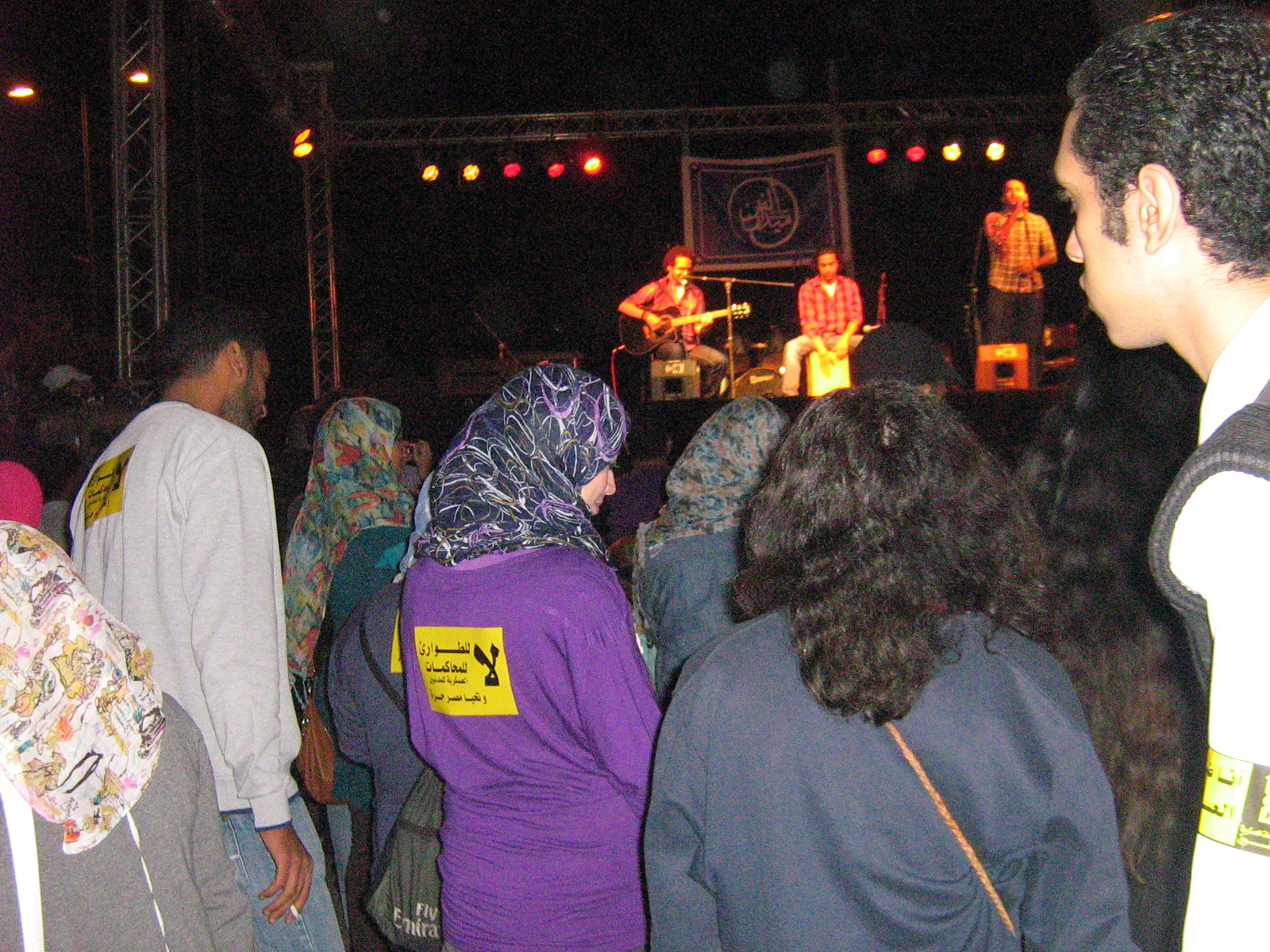
The Fann Midan on the eve of the Eid, and the first one since the Maspero events, had a political cast (short video overview here). The early crowd was young and motivated (though many families etc. drifted in later for the screening of Youssef Chahine’s film The Return of the Prodigal Son – which was also lovely to see).
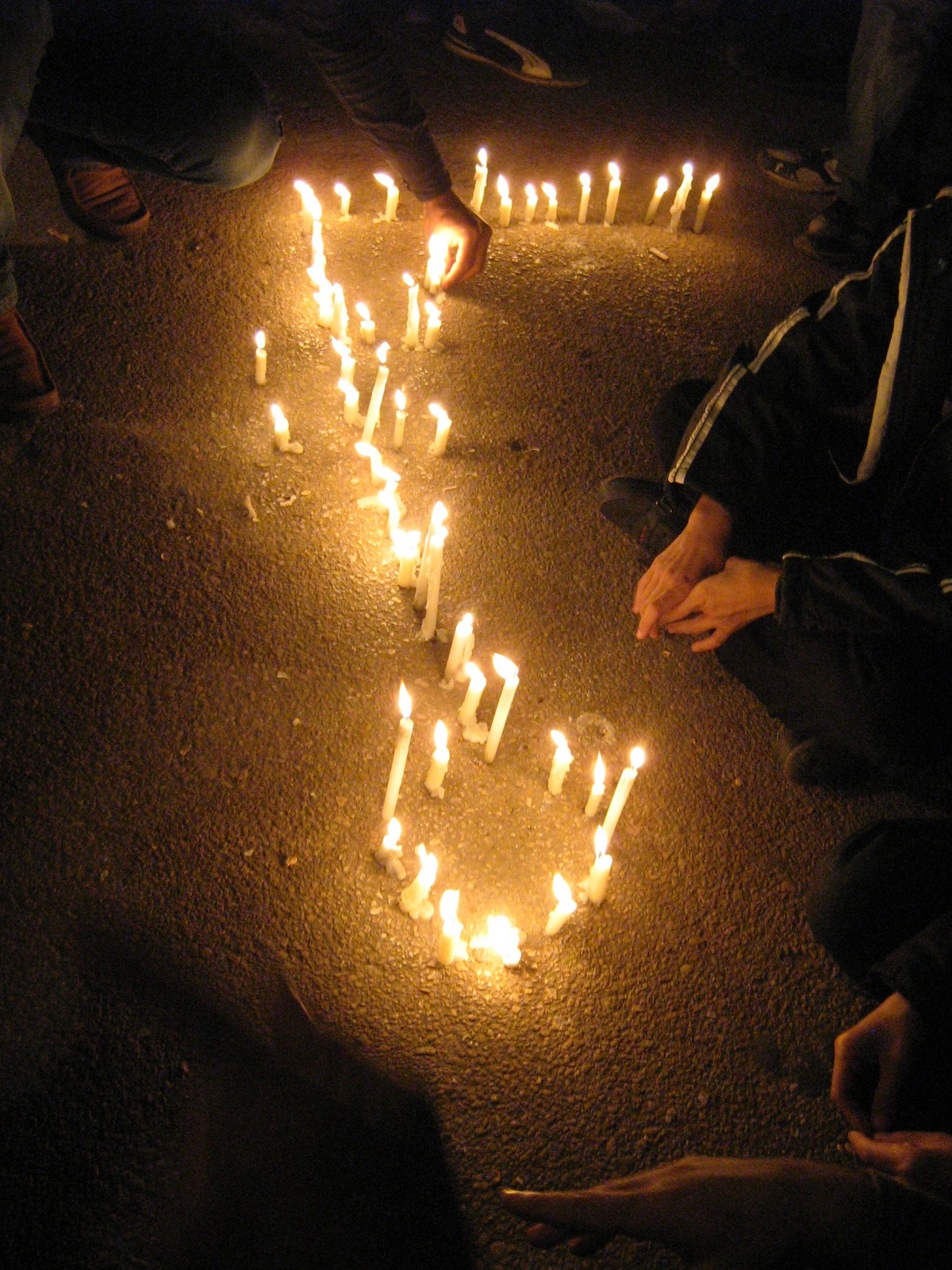
Early in the evening, a vigil for activist Mina Danial and others slain at Maspero; a lot of people were wearing “No to Military Trials for Civilians” and “No to Emergency Law” stickers. (Today I saw one of these pasted on the back of the Talaat Harb statue in his square downtown; looked good there.)

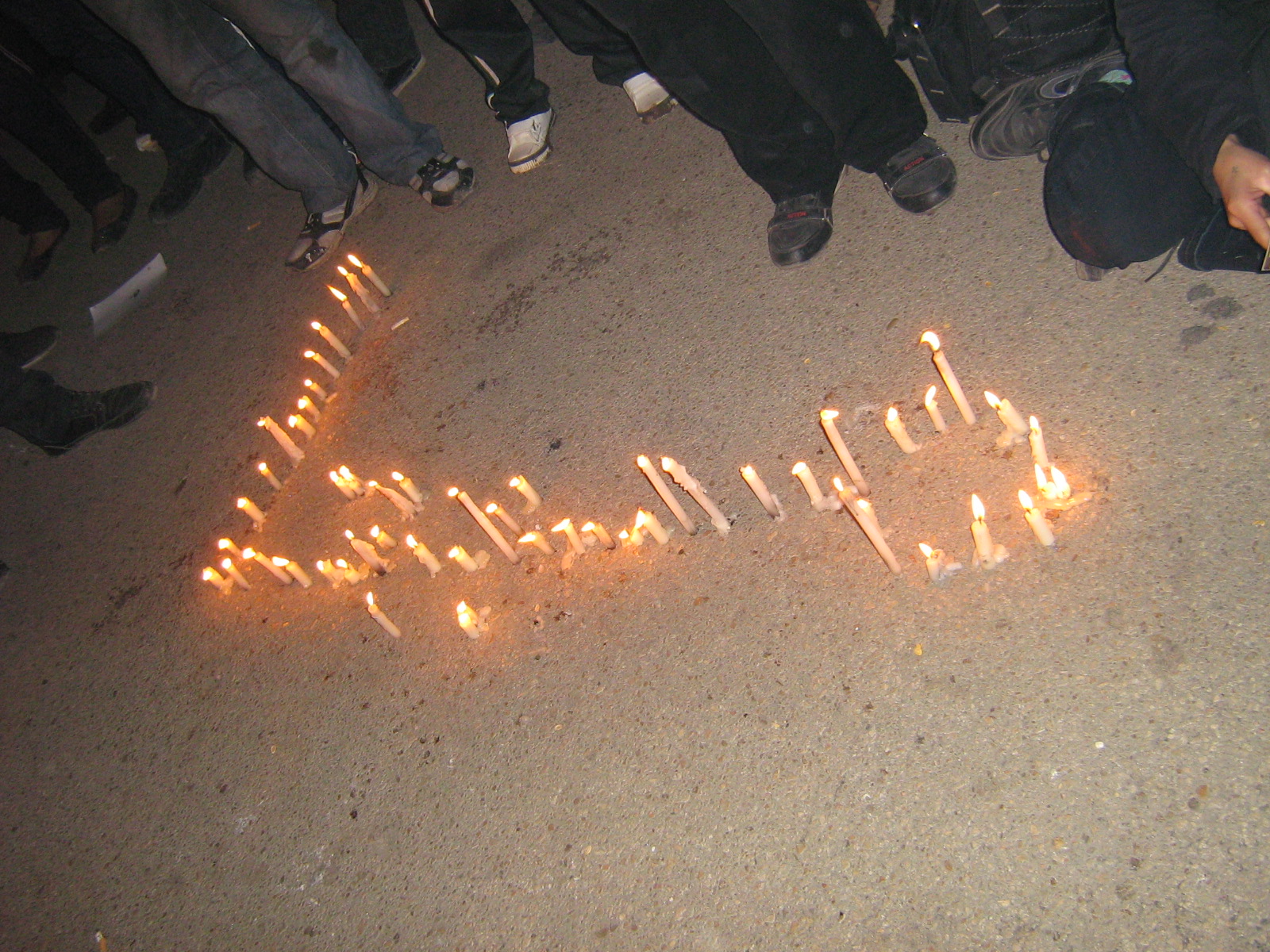
Mina’s name spelled out in candles.


This group’s first song was about Mina Danial and others like him, martyrs of the post-18-Days violence. They explicitly compared the 25-year-old Danial to Che Guevara, whom (as Thanassis Cambanis has pointed out) he resembled.
A later song – sorry for the poor quality recording, but you should be able to find more from the evening (including the performance by Iskandarella) on YouTube – insisted on national unity, with quotes about and from the Gospels and Quran, and this utterly persuasive chorus: “We all are one, and our Lord is one, and Love is one.”

The situation is urgent, the sentiment noble. But I think by calling for “unity” – be it wihda or tawhid – these pro-rule-of-law activists are embracing a slippery meme. Not just because they leave out all non-monotheists, all non-believers of any kind. There problem is that other political factions – whether sporting beards or bayonets – will always outdo them at the unity game. There has been too much of the “one hand” business already. My instinct – and probably the instinct of some of these activists as well? – would be to get liberty and equality first, then work on fraternity. Unfortunately it won’t happen that way. In today’s Egypt, would any kind of call to diversity – as an antidote to potential nascent fascism – even fly?

More from the Shooting Club

On Saturday mornings the Tupperware at the Shooting Club playground is replaced by bags and boxes from French-style bakeries; the mommies and daddies run around behind their wee ones, distracting them on the swingset or slide with force-fed bites of chocolate croissant.
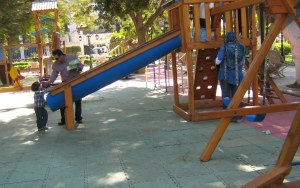
But after my snarky previous post about the Shooting Club, I want to clarify. We don’t pay membership dues for the irony value. I am one of those mommies, though usually found chasing my kids around with a camera rather than a fork. Multilingually educated (عقبالنا!) and preppily dressed, the little Janas and Malaks we meet might be the nearest demographic equivalent of my own overprotected towheads: organic milk only; bike helmet for the tricycle. I’m no more a participant-observer here than at home, at the beautifully maintained playground near our house in a near Boston suburb.
Of course, it feels more liberating (dare I say democratic?) that the playground at home is not a club, has no guards at the gate. It is “free” and “public” for those who can cough up the equivalent of a membership fee in the form of a down payment or rent, or who can drive there and make their children look and act like they belong. That means everyone has to share – no swiping little Emma’s truck or pushing little Liam in the sandbox. (Hey grownups who tell kids to share: would you lend a stranger your iPhone? How about your car?) By the way, with no one haranguing them about sharing, lots of kids at the Nadi El Seid playground have been incredibly generous to mine, sharing their toys, blocks, snacks, turns on the slide, even pushing them on the swings.

Egypt’s class system is a major drain on productivity, but the U.S. East Coast’s also has its pitfalls. We can have a conversation later about how property taxes are collected and allocated, but it’s necessary to note, American allergies to it aside, that the nadi system has its strengths. There is an element of social support. Our neighbor says they organize heavily subsidized trips for members over 70 – e.g., a weekend at a seaside resort in Suez for under 150 pounds (like $25). They show films and have discussion groups etc. They host various exercise classes including a seated-in-a-chair ankle-wiggling exercise for sedentary older ladies. And of course all kinds of things for kids.

But you want to hear about the parents, right? Here’s a sample, quite skewed probably by who is drawn to me as an English-speaking opportunity (though I try to stick to Arabic unless it’s impolite) or whose kids seek out mine. I should emphasize in case it is not clear from the capsules below that all these people (except maybe the first) seemed really very bright and had good, respectable reasons for living or thinking the way they did. I mean no disrespect by quoting them here.

– The flirtatious young mom, sitting poolside to keep an eye on the private lessons of Mimi (Amina) and Kookoo (Karim), amusing herself by having a halfhearted argument with the swimming instructor: This revolution, really! He [Mubarak, it transpires] wasn’t that bad of a guy, was he? And it isn’t fair to blame one man for everything that’s wrong in the country! Look, they got their revolution, and what did it produce? Traffic jams and piles of garbage in the street. The country was cleaner before. (The instructor, from his position down in the water, vigorously disagreed.)

– The very clean-shaven, nattily dressed middle-aged gentleman pushing a three-year-old Malak on the swing (Malak = girl’s name, means “angel,” he said she looked like one at birth so they decided to name her that) is a cosmetic surgeon. He has spent time in the US and Saudi Arabia (duh, of course there’s cosmetic surgery in Saudi Arabia). Upon returning, in view of the Islamization of Egypt, he hired two female doctors to join his clinic. But they get less work than he had hoped: 2) the clients assume a male doctor is more experienced; 2) they don’t feel comfortable showing a female doctor their boobs and (pointing to various sometimes-fleshy places) so on. The outward Islamicization, though, is real. Years ago you could hardly see a higab in the Shooting Club, and now it’s rare to see a woman without one! His female employees all cover up for the commute, then take off their scarves when they get to work, though he doesn’t tell them to. (I’ve seen the assistant teachers at my daughter’s school do the same.) His wife works – a physiotherapist – so on Saturdays when the private schools get the day off they split the day; she finishes work at noon, and he starts at noon.

– The guy built like a tank, whose 2-year-old is throwing sand in the sandbox, turns out to be an officer in the Egyptian Special Forces (القوات الخاصة). He was supposed to go to West Point to train 14 years ago, but the permission was suddenly yanked; he graduated in Egypt instead. Upon learning that I am American: “Oh, I’ve been spending a lot of time guarding the U.S. Embassy these past few months. Since January 28 we’ve been there. At the time, no one knew it was a revolution, just some protests. Whenever there’s any disturbance we are sent to guard the sensitive embassies: you know, the US, Britain, France, Canada, Israel. Bibo, stop throwing sand! Saudi Arabia? Yes. And Kuwait. Also the Egyptian Museum, the ministries, things like that. Interesting? No, it’s hard actually. Is there a culture difference between the Special Forces and the rest of the military? Well, yes. In your country, the ordinary soldiers have missions, experience: Iraq, Afghanistan. Here we have only training. Personally I have worked for the UN, so I have some experience: I’ve been in Somalia, Darfur. But that is not true of the Egyptian military as a whole.” Will I see him at the club again? Perhaps by the pool. He coaches the swimming team!

– The middle-class-looking conservatively muhaggaba mom of a kid taking semi-private swimming lessons: “We drive in from al-Haram, by the Pyramids. Yes, it’s a long way. Does your son only do swimming? Mohammed – he’s five – is about to start soccer next month. Three times a week. Yes, I work – I’m a pathologist. Yes, it’s very hectic sometimes. But…!” I forget where she told me his school was, near home or not; some parents go to incredible lengths (or send their kids to incredible lengths on school buses, across the city or out into the new desert towns, more than an hour each way) to reach the private school of their choice. From talking to the kids I can testify to the strength of these schools’ foreign language programs, at least.

– the super-sweet, outgoing, and well-mannered nine-year-old girl whose family lives right on Kasr El Ainy Street, near Tahrir, repeating what she must have heard at the dinner table: “Oof. They keep demonstrating. All they want is their demands. They don’t want the country to quiet down. It makes so much noise I can’t get to sleep at night. We have another apartment, in Maadi, but it’s still being redone so we can’t move there yet.”

Have you had enough yet? Want me to go spend a day somewhere else? 🙂
Maintaining the morale

We had a conversation about a month ago with a friend’s husband, who is a plastic surgeon. He works in a military hospital. I asked him what he did. “Well, it used to be reconstructive surgery on wounded soldiers and so on.”
And now that Egypt has been at peace?
“Now it’s mostly boob jobs on generals’ wives.”

Sketches of a new/old political stasis


Just went to see this show, “The Last Days of Umm Dina,” at the Rawabet Center with my friend Maha. It was fun: not the sexy bellydancing promised on the poster, and not in fact a history of prostitution in Egypt, but an amateur sketch show (is this the Egyptian genre known as political cabaret?) with some songs satirizing the next-oldest profession, politics. The performers looked a lot like the audience: 20-something, wearing jeans and t-shirts, three women (of whom one muhaggaba) in a troupe of about 10 performers. There were funny numbers on the elections (ElBaradei made a brief appearance, spoke a few words, and beat a hasty retreat promising “the rest on Twitter”… Amre Moussa pretended to be the inevitable candidate doing various gymnastics to distance himself from the old regime… various old-regime leftovers and Islamists stumbled around dispensing violence or bribes and promising a “transitional period of 30 or 40 years or so,” as the three girls sang exaggerated backup to each candidate:
كلام جمييييل، كلام معقووووووول، ما اقدرش اقووووووووووووول حاجة فيه) and related phenomena. One young man deadpanned that after the revolution he decided not to be part of the old regime anymore, but to be part of the new regime (with a military salute showing exactly who Egypt’s “new” rulers were).
Lots of pointed jokes at state-run TV and SCAF and the ongoing military regime, lots of playful saluting, some slapping around of dissidents and would-be-independent journalists and such.
On the poster the show was labeled “a comedy, to a certain extent” – and that’s about right. Some things are hard to laugh about right now – the wounds are too fresh. (At the end the director came out and dedicated the show to Alaa Abdel Fattah.) There were definite moments of collective depression among the audience as well as applause and general hilarity at the SCAF send-ups. Regardless of the quality, it was good to see the downtown theatre crowd out in force, basking for an hour or so anyway in the warmth of shared political disillusion.
If even cardboard-man Tantawi is being readied for a personality cult (witness the celebrations of his birthday yesterday, appropriately coinciding with All Hallows’ Eve and marked by SCAF’s sticking the World’s Tallest Flagpole into the soil of Egypt), then the time will soon be ripe for satire again.

On my street

Yesterday: Demonstration, what demonstration? The men in the neighborhood are all glued to the football match. Al-Ahly 1, Ittihad 0.

Earlier: A man wearing a galabiyya and flip-flops, riding a rickety old bicycle the wrong way down the middle of our one-way street, texting on a neon-green smartphone.

At the Shooting Club

Another scene I haven’t dared to photograph for the multitasking file: On the playground at Nadi El-Seid (the Shooting Club, which we’ve reluctantly joined, not for rifle training but because we live almost next door and it has actual swings and seesaws whereas there is so little usable free outdoor public space in this city — people who can’t afford to join a club sometimes take their children for picnics in traffic medians) there are little kids aged maybe 2 to 5, accompanied by mommies or daddies or babysitters.  (The youngest babysitter I talked to turned out to be 11: a muhaggaba girl who served as live-in nanny for a fairly sophisticated 4-year-old from Mohandiseen.  She was as surprised by the conversation as I was: where was my kids’ nanny, and what did I mean I didn’t need one because I was at the club myself?)  When age doesn’t tip you off, you can tell the mommies from the nannies by the designer sunglasses (not always – some members seem pretty middle class on first view, which is actually shocking considering the reputed 100,000 LE or $16K lifetime joining fee for Egyptians, which could be some people’s entire savings) and also because they are so busy training their children to manage their time efficiently. Three times in two brief afternoons I have witnessed the following: a mom running around behind her child clutching a plastic container with a fork sticking out.  As the child is (literally!) climbing a jungle gym or going down a slide, the mom reaches up, trying to catch the wee one and feed him or her a bite of TupperSupper. Because nutrition can’t wait. Because stuffing in that one bite is more important than training a kid to sit down at a table to eat.

This behavior pattern answers my toddler daughter’s question: “Mommy, why is there a piece of pasta on the carousel?” But it raises other questions.  I won’t get into the nadi (club) culture, and how much of their lives people might be sacrificing to bring their children to the club, and why; we can save that for another post; maybe I’ll take some pix under the guise of photographing my kids. But can we talk about the deeply bizarre food culture? Okay, according to Amitav Ghosh (in In an Antique Land, also probably somewhere in S.D. Goitein), Egyptians have been ordering takeout since at least the twelfth century. Today, they make the Americans I know look like Slow Food devotees (although granted the Americans I know may be atypical – I hear some people do eat things that come individually wrapped, and what about those diehard commuters with glove-compartment microwaves?) Except for Ramadan iftar, I don’t know that Cairene families actually sit down to eat meals together very often. Or sit down to eat at all. Blame it on the long and fragmented work days, the snarly traffic, the implausible commutes. Credit it to the range and quality of street food available, including dozens of kinds of sandwich (liver! french fries! moussaka!), most of them made with fresh ingredients and quite nutritious and inexpensive. Blame it on the contrasting priciness of formal restaurants: when people do sit down to hang out, it’s for much cheaper coffee or tea. None of which, still, explains why you would leave so little time for your three-year-old to eat dinner and play on the slide that you would think it’s a good idea for her to do these two things simultaneously. Maybe we need to talk about nadi culture, or at least upper-middle-class aspirational Cairo parenting culture, after all?

In the women’s car

Since we’ve moved to Dokki, the defining experience of my daily life here, framing everything else, is no longer the taxi but the metro.  Specifically, the women’s car. One day I will work up the courage to take photos there (look, this tourist did it); perhaps I will tell people I am a reporter doing a story on hijab fashion for some local magazine. Actually I will be photographing not just the elaborately color-coordinated and outrageously sexy outfits some girls are wearing but mainly the amazing things people do with their higabs – my favorite is when they use them to store a used subway ticket for the exit gate, or as a nifty hands-free device to hold a cell phone. Women across all societies I’ve seen tend to be resourceful and, being generally overworked, value efficiency.

For now, from the multitasking file, just this.  On Monday I was coming home from Tahrir to Bahoos at 6:30pm and saw a woman actually doing her prayers in the subway car.  Prostrations and everything. She didn’t have a prayer rug, not even a newspaper to spread on the floor, so my first thought was that she had lost an earring and was looking for it under the seats. It was rather crowded; people had to move around to make sure she had space. But she was being as discreet as possible, facing the back wall away from the platform-side door. No one said anything until a lady walked through selling phone recharge cards. Here it comes, I thought, the question about why this prayer is so urgent that it couldn’t wait till she got off the train and at least onto the platform. The vendor stepped around the praying woman, then said, “Honey, the qibla [direction of Mecca] isn’t that way at all, it’s in the totally opposite direction!” The praying woman looked up in mid-prostration. “Really?” Other passengers seemed to confirm.  Then she got up, turned herself around so her hands protruded dangerously under the feet of various bemused passengers, and continued; someone gave her a plastic bag to mark her space so people wouldn’t step on her. Everyone got very solicitous. Even I found myself looking in my bag for a newspaper.

Then we got to the next stop, and the praying lady got off! I believe she had ridden three stops, same as me. But maybe God couldn’t wait. Or maybe (like many extreme multitaskers) she needed to prove it could be done?

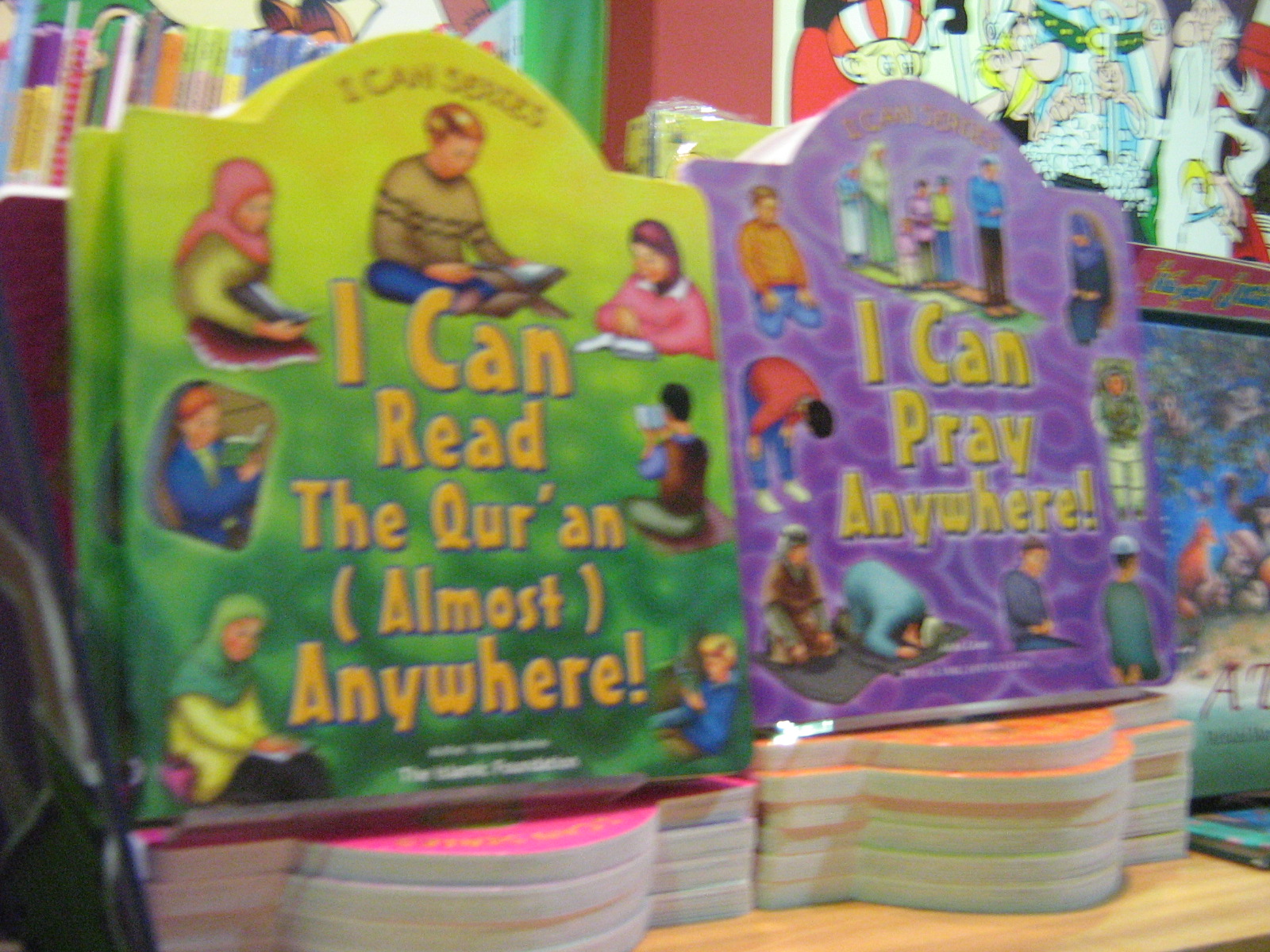
Children's books on display at the Diwan bookstore, Zamalek

Qaddafi as Macbeth one last time

Robert Worth in the NYT:

That is what made the Libyan revolt such a riveting spectacle: unlike the other embattled Arab Spring dictators, Qaddafi showed no doubt, no instinct for compromise and self-preservation. He never really tried to stave off the end with half-hearted “reforms.” He seemed to know he was plunging himself and Libya down a tragic path, and, like Macbeth, to embrace it. Perhaps he understood that he had gone “so far in blood” that there was no turning back. In retrospect, his whole 42-year reign seemed to follow an inexorable arc toward ruin. From the handsome young revolutionary who inspired such hope in his people he transformed into the drugged, puffy-faced madman howling for slaughter in the streets of his own cities. Many Libyans told me they believed Qaddafi used black magic to keep himself in power for so long. I was almost tempted to believe it. I found Chadian witchcraft amulets in some of the weapons depots abandoned by his loyalists. Before his death, he behaved like someone who had sold his soul to the devil, and, like Faust, was waiting to be dragged down to Hell.