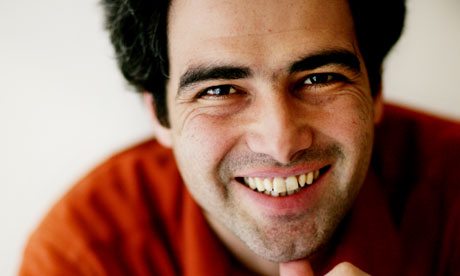
Born in Kuwait and educated in Britain, Sulayman Al-Bassam founded the Sulayman Al-Bassam Theatre (SABAB) in Kuwait in 2002. He has directed his Shakespeare adaptations on four continents, including at the Royal Shakespeare Company, the Kennedy Center, and BAM. SABAB productions are characterized by a radical approach to text, bold production styles, and playful, provocative combinaons of content and form. The Speaker’s Progress, the final play of Al-Bassam’s “Arab Shakespeare Trilogy,” opens at ArtsEmerson in Boston on October 12.
Wednesday, October 12, 12-2pm
The Castle, 225 Bay State Road
Lunch will be served before and during the talk
Sponsored by the Peter Paul Development Professorship, the Department of Modern Languages and Comparative Literature, and the Arvind and Chandan Nandlal Kilachand Honors College
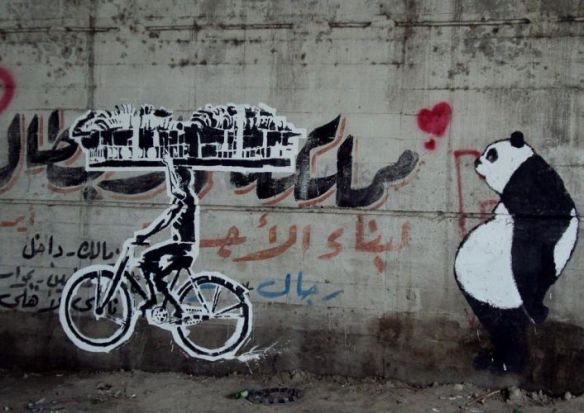
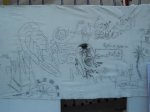
Nice piece today on Egypt’s Graffiti Artists by Lois Farrow Parshley in The Atlantic, with a slide show of some Cairo street art and a profile with artist Mohamed Fahmy (alias Ganzeer). I have been admiring his “bread-delivery bicyclist confronts tank” painting for weeks now (the Atlantic doesn’t show the tank, and I’ve been unable to take a good photo of it yet either). The article also explains the the large panda behind it.
Who are these people spending a lot of ad money to announce, in English, “From Egyptian to Egyptian,” that “Work is our only solution”? Are they Islamists, concentrating on the `amal (practice) rather than the `ilm (knowledge) side of the pursuit of felicity in this world and the next? Are they secularists, retorting to the old (now very rarely heard!) MB slogan that “Islam is the Solution”? Are they regime apologists, telling the activists and unions to cut it out with the sit-ins and strikes and go back to work?
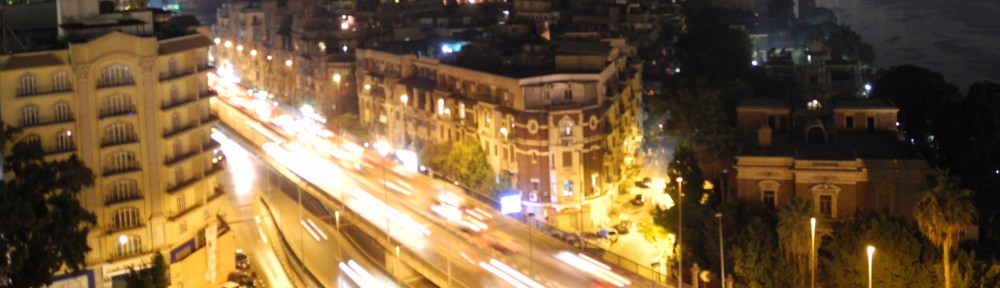
Anyway, the signs are weird and have caused some buzz in the Twittersphere in the last three weeks. They appear prominently not only in Zamalek (the ones above are by the Hurriyya garden at the approach to the Qasr El-Nil Bridge) but also in Kit-Kat and (see below) on the Cairo-Alex desert road.
One perceptive blogger broke it down:
There is one curious political group, which started to anonymously monopolize the beginning of the desert road from Cairo to Alexandria with their huge publicity posters. They read: “From Egyptian to Egyptian: Work Is Our Only Solution!” Standing in the middle of the desert, written in English, white and red on black, the whole of it awkwardly reminded me of the Nazi propaganda “Arbeit macht Frei!” (Work will set you free) placed on the top of a gate which knowingly led to death; the one of the concentration camp of Auschwitz.
Which is the audience that the slogan “Work Is Our Only Solution” triggers? Who is it coming from? From an English speaking Egyptian to an English speaking Egyptian who both have cars and use the Alexandria desert road? Yes, those might be the ones who should start to work in order to change the country! But will they remember and want to share with the 90% of their countrymen who do not talk English, the 80% who do not have cars and the 60% who do not have work?
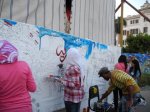
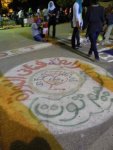
It was dark, but we took a few photos at the Fann Midan festival in Midan Abdin last Saturday night. This is a monthly event that’s been going on since shortly after the revolution: a coalition of a few hundred independent artists putting on concerts and art workshops and handicraft exhibitions in several cities in different parts of Egypt, not just in Cairo. This month’s fest, for the first time, got Ministry of Culture support; this has not been in any way a state initiative.
I talked to one of the women painting in the colors on the mural; she is a “professional artist” (like many people profiled in my friend Jessica’s amazing book Creative Reckonings): what that means here is that she graduated from the Faculty of Art and now teaches art in a school. These are essentially middle-class people, not some kind of snooty elite that has to work super-hard to “bring art to the masses.” At the same time the idea of “tathqif” (the verbal noun of a transitive verb: “to culture, culturing”) the masses is never far from view.
The artist painting people through the plastic sheet had a promising technique and also a challenge; the sheet kept sagging! He solved it by having his subjects hold up the sheet. How to explain why they all had their hands in the air? At the end, paint their hands making victory signs! I would have solved this differently, by making them straphangers in a bus or metro.
(You see some graffiti in “support” of Syria. But organized solidarity for that cause has been weak here. I looked at an apartment across from the Syrian embassy on Friday, and when I asked about possible noise from protest demonstrations, I was told there would be almost none, very sporadic, nothing serious. Egyptian papers carry news from Syria and Libya on the deep inside pages.)
Anyway – what my pix don’t capture is the music, everything from Hasaballah (a weirdly endearing klezmer/marching band hybrid played by elderly men) to “oud rock” to Arabic hip-hop. People of several social classes and cultural preferences from bohemian artist types to munaqabbat (the full face-veil people), some local and others (like a family we talked with who gave my daughter a puppet) trekking in all the way from the Pyramids neighborhood to be there. What a great scene.
This is from the article I was up all that night trying to conclude: basically an analysis of two 2009 festivals of Arab or Muslim performance. Finally, the following afternoon, gave up on defending a single artificially clear thesis and decided to have it both ways. Does this work? Tell me now. There will still be time to make changes in the proofs.
Let me tease out some of the apparent contradictions in the argument I’ve proposed. The skeptic says: it is not art’s job to teach or edify, and artists can even be corrupted by playing to audiences whose curiosity is ethnographic or forensic. The optimist says: events like Arabesque and (perhaps to a lesser extent) Muslim Voices actually can expand audiences’ knowledge of Arab or Muslim realities, and this is a good thing. Likewise, the skeptic says, organized efforts to promote “dialogue” with “the Other” through art are doomed, because they must begin by reifying the Other into a single addressable interlocutor. And yet, the optimist retorts, isolated small moments of dialogic give-and-take sometimes do emerge – although they more often fail to emerge, as in the “deaf dialogue” Brooklyn Q&A described above – from particular playgoers’ encounters with particular performances. The skeptic says: the box is Orientalist, how could it not be? And yet, the optimist says, there are wonderful things inside. At various times and in different roles I have argued for different sides of this debate. To a professional scholar’s ears, the optimist above sounds dated and bizarre: how very 1990s to think a work of art can or should cure anyone’s misconceptions of the Other, and how very 1790s to think it might deepen anyone’s soul. And yet this view still captures some of our intuitions as language learners, dramaturgs, translators, and teachers – or why would we bother? The optimist offers more scope for creative action, even if the skeptic is right.
Too sentimental? I should say that there will be some room for personal reflection in this collection inspired by the memory of Saadallah Wannus; it’s not strictly academic in tone.
Palestinian poet Taha Muhammad Ali, who died today at age 80, belatedly achieved international recognition through translations of his work including those by Peter Cole, and even, thanks to Adina Hoffman, became the first Palestinian poet (ahead of Mahmoud Darwish! to the latter’s reported bemusement) to be the subject of a full-length biography. Now Adina and Peter write:
It is with deep sadness that we announce the death of Taha Muhammad Ali, poet and person of exceptional powers. Taha was born July 27, 1931 in the village of Saffuriyya, Palestine, and died October 2, 2011, in Nazareth, Israel. He will be sorely missed.
As all who encountered the man and his work know, Taha’s imagination was expansive, and several years back he had, as it happens, already conjured his final hours as he’d liked them to have been. This is one of his later poems, from So What: New & Selected Poems, 1971-2005, translated by Peter Cole, Yahya Hijazi, and Gabriel Levin, and published by Copper Canyon Press in 2006.
Tea and Sleep
If, over this world, there’s a ruler
who holds in his hand bestowal and seizure,
at whose command seeds are sewn,
as with his will the harvest ripens,
I turn in prayer, asking him
to decree for the hour of my demise,
when my days draw to an end,
that I’ll be sitting and taking a sip
of weak tea with a little sugar
from my favorite glass
in the gentlest shade of the late afternoon
during the summer.
And if not tea and afternoon,
then let it be the hour
of my sweet sleep just after dawn.
*
And may my compensation be—
if in fact I see compensation—
I who during my time in this world
didn’t split open an ant’s belly,
and never deprived an orphan of money,
didn’t cheat on measures of oil
or violate a swallow’s veil;
who always lit a lamp
at the shrine of our lord, Shihab a-Din,
on Friday evenings,
and never sought to beat my friends
or neighbors at games,
or even those I simply knew;
I who stole neither wheat nor grain
and did not pilfer tools
would ask—
that now, for me, it be ordained
that once a month,
or every other,
I be allowed to see
the one my vision has been denied—
since that day I parted
from her when we were young.
*
But as for the pleasures of the world to come,
all I’ll ask
of them will be—
the bliss of sleep, and tea.
Meanwhile, in Palestine, the incredibly gifted theatre director and actor Francois Abou Salem has thrown himself off a building.
I saw this man play Mahmoud Darwish at the Cairo International Festival of Experiemental Theatre in 2008 in a very powerful one-man show of Memory for Forgetfulness, Darwish’s poetic memoir of the 1982 Israeli invasion of Beirut. It was the only unambiguously good play I saw at the entire festival (the Iraqi show Below Zero that year was also excellent, but had some issues.) Abou Salem’s adaptation included my favorite bit (everyone’s favorite bit) of that book, Darwish’s ode to coffee (start here for English translation, then buy the book and read the rest). And he was surprisingly warm and kind, though tired, when I spoke with him after the show and when we emailed afterwards. There’s something wrong with the sound on my computer, but I think you can watch the coffee excerpt fine; text below.
:
ولكن كيف أصل إلى المطبخ ؟
أريد رائحة القهوة ! لا أريد غير رائحة القهوة
ولا أُريد من الأيام كلها غير رائحة القهوة
رائحة القهوة لأتماسك .. لأقف على قدمي .. لأتحول من زاحف إلى كائن !
لأوقف حصتي من هذا الفجر على قدميها .. لنمضي معاً
أنا و .. هذا النهار , إلى الشارع بحثاً عن مكان آخر ..
كيف أذيع رائحة القهوة من خلاياي .. وقذائف البحر تنقض على واجهة المطبخ المطل
على البحر لتنشر رائحة البارود ومذاق العدم ؟
صرت أقيس المسافة الزمنية بين قذيفتين ثانية واحدة .. ثانية واحدة أقصر من المسافة
بين الزفير والشهيق , أقصر من المسافة بين دقتيّ قلب ..
ثانية واحدة لا تكفي لأن أقف أمام البوتوغاز الملاصق لواجهة الزجاج المطلة على البحر
ثانية واحدة لا تكفي لأن أفتح زجاجة الماء , ثانية واحدة لا تكفي لأن أصب الماء في الغلاية
ثانية واحدة لا تكفي لإشعال عود الثقاب .. ولكن ثانية واحدة تكفي لأن أحترق …
أقفلتُ مفتاح الراديو لم أتساءل إن كان جدار الممر الضيق يقيني فعلاً مطر الصواريخ
ما يعنيني هو أن ثمة جداراً يحجب الهواء المنصهر إلى معدن يُصيب اللحم البشري
بشكل مباشر أو يتشظّى أو يخنق وفي وسع ستارة داكنة – في مثل هذه الحالات-
أن توفر غطاء الأمان الوهمي فالموت هو أن ترى الموت .
أريد رائحة القهوة , أريد خمس دقائق .. اريد هدنة لمدة خمس دقائق من أجل القهوة !
لم يعد لي من مطلب شخصي غير إعداد فنجان القهوة
بهذا الهوس حددّت مهمتي وهدفي توثبت حواسي كلها في نداء واحد واشرأبت عطشي
نحو غاية واحدة : القهوة .
والقهوة لمن أدمنها مثلي هي مفتاحُ النهار
والقهوة لمن يعرفها مثلي هي أن تصنعها بيديك , لا أن تأتيك على طبق
لأن حامل الطبق هو حامل الكلام ,
والقهوة الأولى يفسدها الكلام الأول لأنها عذراء الصباح الصامت
الفجرُ أعني فجري نقيض الكلام ورائحة القهوة تتشرب الأصوات
ولو كانت تحية رقيقة مثل ” صباح الخير ” وتفسد …
لذا , فإن القهوة هي هذا الصمت الصباحي الباكر المتأني
والوحيد الذي تقف فيه وحدك مع ماء تختاره بكسل وعزلة
في سلام مبتكر مع النفس والأشياء وتسكبه على مهل
وعلى مهل في إناء نحاسي صغير داكن وسري اللمعان أفر مائل إلى البني ,
ثم تضعه على نار خفيفة آه لو كانت نار الحطب …
ابتعد قليلاً عن النار الخفيفة لتطل على شارع ينهض للبحث عن خبزه منذ تورط القرد بالنزول
عن الشجرة وبالسير على قدمين , شارع محمول على عربات الخضار والفواكه
وأصوات الباعة المتميزة بركاكة المدائح وتحويل السلعة إلى نعت للسعر ,
واستنشق هواء قادماً من برودة الليل ثم عُد إلى النار الخفيفة –
آه لو كانت نار الحطب – وراقب بمودة وتؤدة علاقة العنصرين :
النار التي تتلون بالأخضر والأزرق
والماء الذي يتجعد ويتنفس حبيبات صغيرة بيضاء تتحول إلى جلد ناعم ,
ثم تكبر .. تكبر على مهل لتنتفخ فقاعات تتسع وتتسع بوتيرة أسرع وتنكسر !
تنتفخ وتنكسر عطشى لالتهام ملعقتين من السكر الخشن الذي ما ان يداخلها
حتى تهدأ بعد فحيح شحيح لتعود بعد هنيهة إلى صراخ الدوائر المشرئبة
إلى مادة أخرى هي البُن الصارخ,
ديكاً من الرائحة والذكورة الشرقية …
أبعد الإناء عن النار الخفيفة لتجري حوار اليد الطاهرة من رائحة التبغ
والحبر مع أولى إبداعاتها مع إبداع أول سيحدد لك منذ هذه الهنيهة,
مذاق نهارك وقوس حظك , سيحدد لك إن كان عليك أن تعمل أم تجتنب
العلاقة مع أحد طيلة هذا اليوم فإن ما سينتج عن هذه الحركة الأولى وعن
إيقاعها وعما يحركها من عالم النوم الناهض من اليوم السابق وعما
يكشف من غموض نفسك سيكون هوية يومك الجديد .
لأن القهوة , فنجان القهوة الأول هي مرآة اليد
واليد التي تصنع القهوة تشيع نوعية النفس التي تحركها وهكذا …
فالقهوة هي القراءةُ العلنية لكتاب النفس المفتوح .. والساحرة الكاشفة لما يحمله النهار من أسرار
ما زال الفجر الرصاصي يتقدم من جهة البحر على اصوات لم أعرفها من قبل ,
البحر برمته محشوّ في قذائف طائشة
البحر يبدل طبيعته البحرية ويتمعدن
أللموت كل هذه الأسماء ؟ قلنا : سنخرج , فلماذا ينصب هذا المطر الأحمر -الأسود – الرمادي
على من سيخرج وعلى من سيقى من بشر وشجر وحجر ؟
قلنا : سنخرج قالوا : من البحر ؟ قلنا : من البحر ,
فلماذا يسلحون الموج والزبد بهذه المدافع ؟
ألكي نعالج الخطى نحو البحر ؟
عليهم أن يفكوا الحصار عن البحر أولاً .. عليهم أن يخلوا الطريق الأخير
لخيط دمنـا الأخير , وما دام الأمر كذلك
وهو كذلك … فلن نخرج … إذن , سأُعدّ القهــوة ..
How totally lame is it that even Sean Penn made it to yesterday’s protest in Tahrir, and I didn’t? What was I doing, exactly? Staying home while my toddler took a nap? Nursing an intense (and intensely undeserved) sense of bitterness about this whole “revolution” thing?
On Thursday morning I visited my son’s primary school. The Irish-born teacher put on a somewhat surreal little impromptu concert for me; the kids sang along to a YouTube recording of post-revolution triumph songs and then a few Muzak Christmas carols (she saw no tension here). Part of her civilizing mission, I guess: teach her little charges to stand up straight, sing out loud, snap their fingers and sway to the beat, etc. “It gives them confidence,” she declared, happy to have me as a captive audience. It was sweet to hear this motley crew – the teacher announced their countries as they took solos: kids from Indonesia, Lebanon, Syria, Iraq, Palestine, and one newly arrived from Poland, plus my son – sing “Bladi, Bladi” (which means “My country, my country,” contrary to how it might sound to Russian speakers!), a song dedicated to the fallen heroes of the revolution. But it was downright moving, as in almost made me cry (granted I had pulled an all-nighter to meet an article deadline, on which more later, so was probably feeling more emotional than usual), to hear them sing a song released shortly after Mubarak fell, its lyrics based on posters carried by triumphant demonstrators in Tahrir: “I went down [to protest] and said I’m not going back. And all the barriers broke down.”
Because the thing is, this may be a cheap shot, but they are going back, and the barriers are coming back fast. Many Egyptians are starting to feel – as in this clever sign that Walter Armbrust photographed yesterday and posted to Facebook – that the revolution is being strangled in its crib.
A salutary rejoinder to the gloom was Steve Negus’ recent piece arguing that the revolution has made subtle but crucial gains that have (in his cautious phrase) “so far survived the counter-revolution.” It isn’t all or nothing. And much has changed. Maybe some barriers have broken down inside Egyptians themselves, maybe the political landscape has opened up a bit (though not at the top), and slowly, slowly, there can be an improvement of the political situation?
If the government hasn’t changed, at least the surface of the society (all I get to see, unfortunately) has gotten more interesting. Tomorrow we meet our “fuSHa (literary Arabic) conversation” teacher to talk about the possibility of “coexistence” تعايش between people of different beliefs and cultures in Egypt, taking as an example the Costa Salafis سلفيو كوستا and an astute (but decidedly non-fuSHa) film they produced, “Where is my Ear?” So, at least we get to spend our morning basking in the basic civility of Egyptian society. These guys are hilarious!
He changed his clothes.
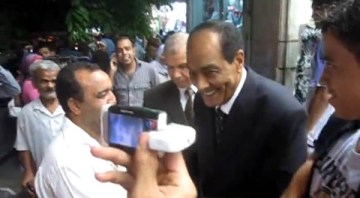
Field Marshal Mohamed Hussein Tantawi, a well-preserved 75, appeared downtown on Monday wearing a civilian suit rather than his military uniform. State TV gave him the glowing coverage you might expect for, say, a presidential incumbent seeking re-election. You can read in on the whole “incident” here and view a video here.
So for the last two days the Photoshoppers have been having a field (marshal) day; my Facebook feed has been buzzing with hilarious caricatures like these, which I reproduce for the convenience of those of you not on Facebook. This one has him saying, essentially, “Don’t like the civil/ian? Let’s make it Islamic!”:
(from indefatigable Brazilian cartoonist Carlos Latuff)
and best of all, this, which shows Egyptians all their electoral options (#s 7 and 8 allude to the “workers” and “farmers” who play a big role in politics, since by SCAF decree members of these groups must make up half of all party lists):
Not everything is about costume politics here, but sometimes you wouldn’t know it. Today’s newspapers also ran a photo of the U.S. Ambassador to Egypt, Anne Patterson, wearing a huge scarf wrapped around her head as she endured a prickly meeting with the Grand Shaykh of Al-Azhar, Ahmed El-Tayeb.
You will find quite a few photos from this series with a a Google image search for “آن باترسون الأزهر حجاب ” But curiously, searching for any English variant I can think of, like “anne patterson egypt azhar hijab [or higab],” turns up nothing. Why – is the English-language press more focused on the substance of the meeting? (But the costumes were the substance.) Or just shy about showing their ambassador in a position that could be construed as disempowering? Donning the headscarf had been El-Tayeb’s precondition for the meeting.









 Send Down the Basket!