Shakespeare at the Alwiya Club – a bygone Baghdad era

My colleague Kecia Ali alerted me to this beautiful reminiscence by Abdul Sattar Jawad, an Iraqi literature scholar who was forced to flee Baghdad in 2005. Titled “Shakespeare in Baghdad,” it just appeared in Duke University’s student paper, The Chronicle.

There are some spiky details under the surface of the piece.  For instance, “Iraq” functions as a metonym for everything in the Arab world (just as “Egypt” does for Egyptian intellectuals), including a late 19th c adaptation of Romeo and Juliet adapted by a Lebanese migrant for performance in Cairo.  Also there is curiously no mention of the great Palestinian-Iraqi poet-novelist-critic-translator Jabra Ibrahim Jabra, who did so much for Arabic reception of Shakespeare (and of Abdul Sattar Jawad’s other great love, T.S. Eliot).  But who wants to quibble?  The piece is a lovely evocation of a cosmopolitan Baghdad paradise very similar to Jabra’s and now, unfortunately, lost for the forseeable future.
Here’s the opening: 

Shakespeare in Baghdad

It has been nearly thirty years since I drove to Oxford to visit its celebrated university and pay tribute to Shakespeare’s mausoleum in Stratford-upon-Avon in the heart of England. I was greeted in what seemed unthinkable: “Hey Sheikh Zbair, how’d you do?”
It was really a surprise to me although I am well aware of the Iraqi myth alleging that William Shakespeare is an Iraqi from Zubair, an Iraqi city bordering Kuwait and Saudi Arabia. This myth was disseminated by Iraqi scholar and poet Safa Khulusi, who did his Ph.D. at London University in the 1940’s and then settled in Oxford as Chair of Islamic Studies. Of course this funny theory was very popular among Iraqis from different walks of life, who loved Shakespeare through his plays and poems taught at high schools and colleges.
Similarly, when I first came to Duke in 2005, Bruce Lawrence, professor emeritus of religion, extended his hand to me at the John Hope Franklin Center and said: “Welcome Sheikh Zbair.” From that time I realized that the Iraqi myth had crossed the Atlantic and become a source of fun, if not laughter. To the Iraqis and Arabs, Old Will is perceived as a bringer of much delight and gladness to mankind and the only author read or staged everywhere. He is, as Harold Bloom, one of America’s leading critics, said, an international possession transcending nations, languages and professions. Through invention and originality Shakespeare has notched the highest popularity and survived migration from country to country.
Old Will always manifests himself as a force that continues to activate the potential of other languages, in terms of grammar, vocabulary, register, rhythm and tone. In Iraq, Shakespeare was received as the most popular playwright and poet who taught us how to understand the human nature. His plays were performed even in the Iraqi vernacular: Othello retrieved his Arabic name Utail, Iago was Arabized into Yaccoob and Romeo and Juliet took a new title, Martyrs of Love, to attract public attention and boost the box office.
Read the whole thing…

Varia

Small things:

  • Long post on my other blog about a conversation with a prominent theatre director about Shakespeare adaptation. But I have to mention here that while we were talking, his car was robbed: a theatre staffer came to tell him that someone had broken the window, stolen his cashmere overcoat and the money in the pocket, made off with some CDs, even taken his reading glasses.  The director carried on with the interview as though nothing had happened.
  • The Guardian-Observer calls my book “inspired” and suggests it as a “quirky” Christmas present.  Woo hoo!
  • Wild rumor circulating about the Salafis: if they come to power, they will try to ban Egyptian women from wearing makeup.  But then, wouldn’t the economy grind to a halt completely?
  • Tension and mud-slinging (mutual allegations of voting-day irregularities, etc) between the Brotherhood and the Salafi Nour Party as they contest twenty seats in first-round runoff elections today.  The Arabist has some good charts on what it could lead to.  No telling (because we still don’t know what kind of powers this Parliament will have) what it will mean.
  • Nine days later, old-New Prime Minister-designate Kamal Ganzouri has yet to form his “national salvation” government.  And all he has to deal with is SCAF and the Egyptian public. Imagine the government-formation process after an election when you would also have to deal with competing parties and political factions?
  • Shades of Hamlet? In the lead-up to last week’s polls, not one but two English-language newspapers, AMAY and Ahram Online, ran the headline “To Vote or Not to Vote?” (Thanks, Amy Motlagh.)


Fahmi Al-Kholi’s post-Camp-David "Merchant of Venice"

Sometimes, to be naughty, before the Arab Spring, a reader would ask me: “It’s all very well what the Arabs have done with Hamlet. But what do they do with The Merchant of Venice?”  I have generally avoided focusing on this question; it’s not my favorite Shakespeare play anyway.
And yet: Could it be the case that Arab theatre’s response to the Camp David Accords challenges my basic historical claim that there was no space for “real” (i.e., aspiring to have an effect on policy) political theatre after about 1976? 
I met last night with the Cairo-based theatre director Fahmi El-Kholi, whose production of Shakespeare in Ataba I had written about in my book. Just wanted to (belatedly) check some hunches on scenography, allegory, and reception.  But before I know it, he launches into a description of a Merchant of Venice production he directed at Cairo University in 1978, right after the Camp David Accords, and revised/reprised in 1979-80 with amateur actors at the Workers’ Theatre at the Nasr Automobile Company.  Recall the context: huge demonstrations against Sadat, and resolutions by most of the relevant professional organizations (Writers’ Union, Cinema Union, Musicians’ Union, Theatre Makers’ Union) to condemn and oppose any sort of “normalization” effort that would involve cultural interaction with the Zionist Entity. Anyway, El-Kholi said it enjoyed an unbelievably warm reception, sliding past (probably sympathetic) censors and inspiring audience members to come see it with Palestinian flags on their lapels and keffiyyehs on their heads.
His description included:

  • Modern dress; Shylock, in black shirtsleeves “like an accountant or merchant” carried a calculator and used it to sell weapons to a long line of buyers from different nationalities. Later he would calculate the pound of flesh which was, of course, a slice of land.
  • The set was a bare stage punctuated by two crosses: one placed horizontally/diagonally (rising at a slight angle) from downstage to upstage; the second vertical, upstage, made of olive branches with a Palestinian keffiyyeh on top where the crown of thorns would be. At crucial moments in the play the keffiyyeh would start to drip little drops of blood thanks to a specially attached mechanism.  Because the Palestinians, you see, were crucified on the olive branches of the peace accord.
  • The actor playing “the big brother” Antonio impersonated the speech patterns of Nasser in Act I, then (after N’s death) acquired a pipe and glasses to become Sadat in Act II. 
  • A young woman called Palestine, bleeding and fleeing her captors in a torn white dress, appealed for help to her fiance Yasser (Arafat), then to her big brother (Egypt).  They ultimately failed to help her.
  • Shakespeare’s text (in translation) was used “word for word,” except that loaded translations were chosen for certain key terms. E.g., Shylock’s “bond” became اتفاق, which means “agreement” or (the term used for Camp David) “accord.”
  • Shylock became, in the 1979-80 restaging, Shylock-Yahu in honor of (then also) Israeli Prime Minister Benjamin Netanyahyu.  
  • In the 1979-80 workers’ restaging, the set included the dome of al-Aqsa mosque, with 14 men chained to it by ropes coming off different sides. (Ropes are a recurring element in El-Kholi’s scenography.)  The ropes acted mainly as leashes (El-Kholi described them as “like umbilical cords”), but at the crucial moment (at the end, when the Arab world rises) were activated to allow the men to defeat Shylock.  Most of Shakespeare’s script was dumped, leaving only the scene of Antonio’s deal with Shylock and the trial scene.  Other parts of the script were taken from public recordings of UN and Arab summit meetings, historical documents, and Sadat’s famous speeches leading up to his peace initiative. At other times, quotes from the Israeli news media and Israeli leaders’ speeches were reproduced by actors dressed as rabbis, sitting on onstage toilets, evidently suffering from diarrhea, pulling the chain after every one-liner. In both productions the trial scene was played as a UN meeting, with the Duke a figure for the UN Secretary-General.
  • Oh, and did I mention that the play went all the way back to 1948? That was the scene with the torn white dress.  The 1967 defeat was figured as all the 14 men lying around sleeping with model planes balanced on trays on their bellies; Shylock fished for these planes with a fishing rod, and when he caught one, it blew up. The 1973 “victory” was figured too. 
  • “And I forgot to tell you,” El-Kholi said. “I opened the play with a somewhat flashy opening scene. It was in Damascus, and a Muslim man disappeared, and a small Christian boy disappeared. This actually happened. And it was found that…” The scene he described was an enactment of the “blood libel” myth of Jews grinding up Christian boys to enrich their Passover matzoh (he called it “fateera“): the victims were hung upside down, dripping the same small red drops of stage blood, while a group of rabbis performed some kneading motions to the tune of (he hummed it for me) Hatikva. The matzoh they ate was, of course, supposed to represent the Arab lands, “from the Nile to the Euphrates.” El-Kholi then added, unprompted (I wasn’t even going to get into it – where would you start?): “Oh but we have no problem with Jews. Everything was fine before 1948. There were Jewish families in Egypt, Jewish businesses, department stores, everything.”  
  • What about censorship, I asked?  Surely this blood libel scene would have violated two of the major state censorship taboos (politics and religion), especially in the volatile aftermath of the peace accords?  Well, he said, we took out the scene in the script shown to the censors, and then we reinserted it for the performance.

All this left me, as a scholar of theatre, with only one question: with so much strong imagery available, why enlist Shakespeare at all?  I asked him, and he didn’t really give an answer. Not a ticket past the censors. Not high-cultural cred for a sketchy contemporary message. (In fact I think it was both those things. Despite every expectation that the audience and even the actors would not know Shakespeare’s text, the big-name pedigree would impress them.) Fahmi El-Kholi said only: “Well, Shylock is generally associated with Israel, with Zionism, with the pound of flesh being the slice of Arab land.”  He and I were both able to cite several plays along these lines, both by older (Ali Ahmad Bakathir, Shylock al-Jadid) and by younger (Ibrahim Hamada, Ratl al-Ard) playwrights.

And then the conversation moved on to other things.  Have you seen his latest Shakespeare effort, Measure for Measure, produced in Doha in 2006?  Reviews here and here.  Or what about Jerusalem Will Not Fall, an elaborate agit-prop historical starring Nur El-Sherif, in 2002?  El-Kholi was also honored with this year’s State Distinction Award in the Arts in a surreal mid-revolution awards ceremony in July.
El-Kholi’s current projects? Either a play called Hulagu about the U.S. occupation of Iraq (“as soon as I can find a good person who will fund it” – sounds like this one has been on the drawing board for some years now) or, responding more immediately to the 2011 Egyptian “revolution” and its uncertain aftermath, a revival of Salah Abdel Sabur’s play Leila and the Madman (1970).

From Guantanamo to “post”-“revolutionary” Egypt

We got hope and change and yes we can. They got a revolution. But former Guantanamo detainee and current Egyptian prisoner Adel al-Gazzar has gotten… well, there is no polite way to put it. It seems the War on Terror is still doing its multinational damage.

Injured in an airstrike in Afghanistan, sold for a bounty to Guantanamo, forced to wait eight years (!) after the US cleared him for release, resettled in Slovakia but illegally imprisoned there, the man comes home to Egypt after the revolution and — gets arrested at the airport.  Read his whole story here.

My ferociously smart friend Katie Taylor, after working for years in Palestine, is now in London at an NGO called Reprieve, which advocates for the human rights of people on death row and people who are or have been at Guantanamo. She is working on Adel al-Gazzar’s case. She says it’s likely his in-absentia conviction, in a multi-defendant trial based on testimony extracted by torture from co-defendants while Adel sat at Guantanamo, will be overturned on appeal.  The Military Prosecution (of course this is a military trial) unexpectedly fast-tracked his hearing a few days before the election; ruling expected as early as tomorrow. Stay tuned.

Putting it gently

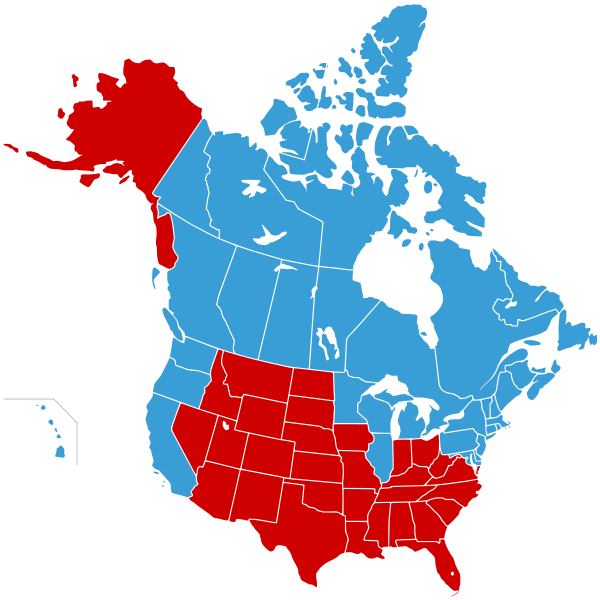
Remember the United States of Canada and Jesusland?  One friend of mine who lives in Heliopolis (where polisci professor and liberal hottie Amr Hamzawy has beaten out the FJP candidate for the individual seat) just jokingly offered political asylum to her friends from other districts.

Oh, and Al-Masry al-Youm, in its front-page editorial today, reminds its (predominantly liberalish) readers that the Islamist candidates who seem to have won a majority in the first round yesterday are indeed Egyptians. “Their ideological allegiance should not make us deny their Egyptianness, their citizenship, or their ambition to participate in politics.”  And it adds, a bit alarmingly:

Before the Islamic current are numerous examples of successful experiments of majority-Islamist parliaments. The [Egyptian] people wants [الشعب يريد] it to be closer to the Turkish experiment than to the Afghan one.

Umm, by “the Afghan experiment” do you mean the lloya jirga, or the Taliban?

On machine politics

By the way: my father-in-law, as a young man in Chicago, went to his voting place. “Here,” said the helpful campaign volunteer. “We have these new voting booths now, let me show you how they work.”  The worker went into the booth with him, behind the curtain. “You see, the levers work like this. So, say, if you wanted to vote a straight Democratic ticket, you would just go like this–” and he proceeded to pull them for him!   I have not, so far, heard of anything like that happening here.  All the reports we’ve heard of the Brotherhood employing children to distribute leaflets, driving voters to the polls, directing them to polling places with maps printed on FJP stationery, etc. etc. pale in comparison.

And who’s getting the next round?

Hey friends who are political scientists or Lebanese: how do multi-round elections, with staggered dates for different parts of the country and well-publicized early rounds, tend to affect voter behavior and election results?

Egypt’s amazingly cumbersome parliamentary election process, as though designed (like Iraq’s) to produce gridlock and purple-finger fatigue, is scheduled to go on till March. (The Al-Jazeera graphic linked above looks like something developed by Rube Goldberg — and it’s not AJE’s fault.)  Monday and Tuesday’s voting was only for the first of three rounds of the lower of two houses. Individual-candidate results are supposed to be released today, but list-based results won’t be available till January, and the Shura Council (upper house) elections won’t start till after that.  Oh and some candidates are running for both (imagine, like campaigning simultaneously for the house and the Senate?)

The problem is that meanwhile, someone needs to put together a government, because the (non-)care-taker Essam Sharaf government has, you will remember, tendered its resignation.  The Muslim Brotherhood, on the strength of (its own) exit polls giving its Freedom and Justice Party 40% in the first round, has claimed the right to form that government.  The Salafi Nour party has contested this, claiming (plausibly) that it stands to pick up a lot of seats when the voting finally gets to Upper Egypt.  And SCAF points out that under (its own) constitutional declaration, the executive (in this case SCAF – surprise!) gets to form the government, with no binding input from the recently elected parliamentarians.  But they did convene a group of political “symbols” (those presidential contenders and activists who didn’t skip the meeting) to advise them on its makeup.  If the Brotherhood decides to take on SCAF, it could be interesting.

October Mag: "Who Will Rescue Egypt?"

A word on “national salvation,” the term still being used to describe the hypothetical next government. No one calls it “national unity” government, because that would imply getting differing parties together and making them actually listen to each other. Instead it is a rhetoric of a single body politic (Hobbes, anyone?) in danger, in need of “rescue.” Anyone who wants to throw a conflicting view into this underlying unanimity — like the protesters still camped in the Midan — is accused of having “private interests”; these, ever since Nasser’s leftist fascism pre-empted Egypt’s liberal project, have been a dirty word.

A week ago, I thought that putting the parliamentary elections first was a terrible move.  The opposite process would have produced less instability, less animosity: quick presidential elections within 60 days as mandated by Egypt’s 1971 constitution, then a constitutional convention, and then parliamentary elections once it was determined what the political system would look like.  Or even something like Tunisia’s process.  Instead Egypt got a summer of mud-slinging and dirty campaign tricks, largely eroding the much-vaunted “spirit of Tahrir.”

But now I think the opposite argument is nearly as valid.  With a real choice at the polls (albeit in most cases only between the machine-politics Islamism of the Brotherhood and the ultra-moralizing Islamism of the Salafis) perhaps Egyptian voters may start to feel that differing opinions, even differing interests need not pose a fatal threat to national cohesion. That it is possible for two citizens to disagree politically without one of them necessarily being a traitor.  This is a hope rather than a prediction; such tolerance is hard to achieve even in places with a long history of liberal politics. But you do hear people on the phone with their relatives discussing whom to vote for, or reacting to the election results, and it is not all “we are obviously right and they are obviously evil.”  This may be precisely because there are so many flavors of Islamism on offer, and likewise so much fragmentation among the liberals, two facts that commentators have generally seen as bad.

Meanwhile the “interests=treason” rhetoric (which I hate, can you tell?) may have its uses, too.  The independent weekly Sawt Al-Umma (unfortunately not available online) ran a big investigative piece last week with lavish photos of the villas owned by Field Marshal Tantawi and other SCAF members, and the deeply discounted contracts under which they bought them. Front-page headline: the word “VOID” in gigantic letters, under Tantawi’s signature olive-green cap.  An inside subheading: “How the SCAF leaders changed from living in humble apartments in officers’ residence blocks into billionnaires and palace owners in the Mubarak years.”  Still doesn’t get to the military’s stranglehold on the economy as a whole, but it’s a start.